Introduction
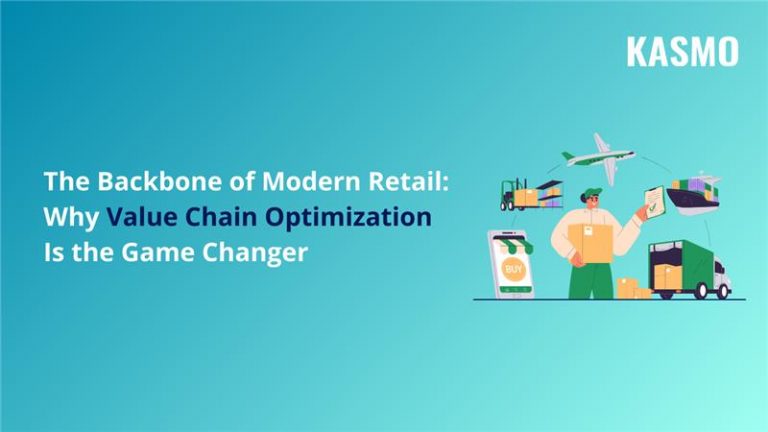
A well-orchestrated value chain is the heartbeat of every successful consumer goods brand. As customer expectations are rising and competition is high, optimizing your value chain is essential. It transforms raw materials into finished products by connecting suppliers, manufacturers, and retailers in one continuous flow. Following the traditional value chain method cannot meet modern requirements. So, brands must rethink how their value chain operates to make it faster, more agile, and deeply connected to consumer needs. From sourcing and production to distribution and retail execution, every link in the chain must work together.
In this blog, we’ll explore in detail consumer goods value chains, understand why optimizing them is important, identify common challenges, and how Salesforce empowers CPG brands in creating consumer-focused value chains.
Understanding the Consumer Goods Value Chain
The Consumer Goods value chain represents the entire journey a product takes from sourcing raw materials to reaching consumers and capturing post-purchase insights. It creates a flow on how CPG brands operate, encompassing every stage that adds value, enhances efficiency, and ensures customer satisfaction. In simple terms, it’s a system of interconnected processes that helps consumer goods companies design, produce, distribute, and market products effectively while maintaining profitability and responsiveness in a highly competitive market. The key steps included are-
Sourcing and Procurement: This is the foundation of the CPG value chain. It involves identifying and managing suppliers who provide raw materials, packaging components, and manufacturing inputs.
Manufacturing Stage: Once materials are sourced, they move to the production stage, where products are produced and packaged for sale.
Warehousing: After production, products are stored, organized, and managed before being distributed.
Distribution and Logistics: This stage connects manufacturers to wholesalers, retailers, and consumers. It involves logistics, transportation, and networking to distribute products from the production point to customers.
Sales and Marketing: This brings products to the market and creates demand. In the CPG sector, it involves a blend of traditional retail execution and digital commerce.
Retail Execution: Once products reach the shelves of stores or online platforms, the focus shifts to ensuring consistent brand presence and service quality.
Feedback: The final stage includes consumer feedback, sales performance, and market analysis to refine products, pricing, and growth strategies.
Importance of Consumer Goods Value Chain Optimization
Optimizing consumer goods value chains makes companies more agile and customer-centric. It is key to driving efficiency, profitability, and customer satisfaction in the crowded market. It ensures that every stage, from sourcing raw materials to delivering products to customers, operates efficiently and cohesively. A strategic value chain process minimizes costs and improves collaboration among suppliers, manufacturers, and retailers. This optimization results in faster production cycles, improved inventory management, and greater visibility across the entire supply network.
Beyond operational efficiency, it ensures that products reach the right markets at the right time while maintaining quality and compliance standards. This, in turn, increases brand loyalty by ensuring consistent product availability and customized consumer experiences. Also, brands taking up sustainability initiatives have the added advantage of grabbing customer attention. It also minimizes waste, reduces carbon emissions, and promotes responsible sourcing and packaging.
Common Challenges in the Traditional Value Chain
The traditional consumer goods value chain faces several challenges with outdated processes and a lack of visibility across the supply network. Here are some of the most common issues:
Inefficient Demand Forecasting
Traditional forecasting methods often rely on historical data and manual inputs, which fail to meet changing consumer behaviors. So, companies end up either overproducing or underproducing, leading to stockouts, excess inventory, and losing sales opportunities.
Lack of Consumer Insights
Without integrated systems, consumer feedback and buying patterns cannot be analyzed effectively. This limits a company’s ability to improve product line, marketing, and distribution strategies.
Limited Supply Chain Agility
Legacy systems and rigid processes make it hard for companies to adapt to sudden market shifts, global disruptions, or seasonal demand changes. A lack of flexibility in sourcing, manufacturing, and distribution affects responsiveness and competitiveness.
Rising Operational Costs
Inefficiencies across logistics, warehousing, and inventory management increase operational expenses. Also, it leads to high raw materials, packaging, and freight costs. Companies struggle to balance cost control with service quality and profit margins.
Poor Collaboration Across Partners
The CPG value chain relies heavily on collaboration among suppliers, manufacturers, distributors, and retailers. Traditional systems often lack real-time communication and shared visibility, resulting in misaligned goals, delays, and planning errors.
Product Quality and Compliance
Managing quality control across multiple suppliers and production facilities is challenging without a unified oversight mechanism. Inadequate tracking can lead to non-compliance with safety, labeling, or environmental standards, affecting brand credibility and consumer trust.
Sustainability and Waste Management Issues
Traditional value chains often prioritize speed and cost over sustainability. Inefficient transportation routes, excess packaging, and unmanaged waste contribute to higher environmental impact, affecting brands’ reputation and customer trust.
How to Optimize Your Consumer Goods Value Chain
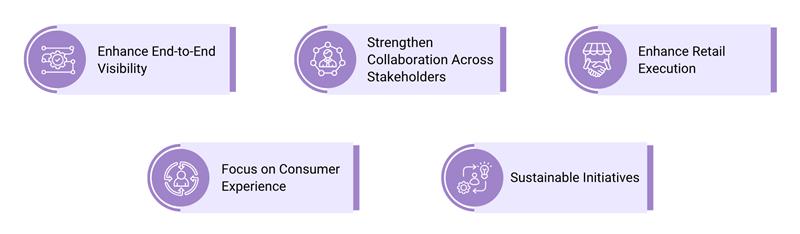
CPG brands need to rethink their traditional processes and adopt modern and integrated approaches in the value chain to meet both customers’ and stakeholders’ expectations.
Enhance End-to-End Visibility
A major step toward optimization is achieving complete visibility across the value chain, right from sourcing raw materials to feedback systems. Real-time tracking of procurement, production, logistics, and sales enables companies to identify inefficiencies, monitor inventory flow, and anticipate disruptions early. Implementing cloud-based systems like Salesforce provides unified dashboards to gain a single source of truth for all operations. This visibility allows leaders to make data-driven decisions, reduce delays, and improve collaboration across departments and partners.
Strengthen Collaboration Across Stakeholders
The consumer goods value chain involves multiple players including suppliers, manufacturers, logistics providers, and retailers. Building collaborative ecosystems ensures transparency, accountability, and agility. Improve collaboration and communication among them to improve transparency and smooth value chain processes. Companies can use shared platforms for demand forecasting, inventory management, and supplier coordination. When every partner has access to the same information in real time, it eliminates miscommunication and reduces lead times.
Focus on Consumer Experience
According to Salesforce, 62% of consumers expect engagements based on actions and behaviors. So, consumer experience is a major aspect of value chain optimization. Every stage, from sourcing to post-purchase engagement, should align to meet consumer expectations. Integrating consumer insights directly into the value chain helps to anticipate customer needs, personalize offerings, and deliver consistent brand experiences across channels. Connecting marketing, sales, and service functions with supply chain operations provides proper consumer feedback analysis to link planning and production. A consumer-connected value chain increases operational efficiency, customer loyalty, and revenue growth.
Enhance Retail Execution
Proper retail execution ensures that products are always available, well-displayed, and aligned with shopper expectations. Strong retail execution bridges the gap between brands and consumers, turning strategy into action at the store level. Gaining insights helps sales teams and field representatives monitor stock levels and shelf performance. This helps brands quickly address out-of-stock situations, optimize merchandising, and ensure consistent brand presence across locations. Using Salesforce Consumer Goods Cloud helps to access in-store data and gain actionable insights to improve sales productivity and brand loyalty.
Sustainable Initiatives
Modern consumers expect brands to operate responsibly, making sustainability a vital part of value chain optimization. Companies should adopt environmentally conscious practices such as energy-efficient production, waste reduction, and eco-friendly packaging. Sustainability initiatives reduce costs, improve brand image, and meet the growing expectations of ethical consumers.
How Salesforce Enables Value Chain Optimization
Salesforce empowers consumer goods companies to optimize their value chains by creating a connected, data-driven ecosystem that enhances visibility, collaboration, and agility. With solutions like Consumer Goods Cloud, Sales Cloud, and Experience Cloud, organizations can unify data from all departments into a single platform. By connecting every part of the value chain, Salesforce ensures seamless communication, efficient operations, and stronger alignment across all functions. Salesforce’s Experience Cloud and Partner Relationship Management (PRM) tools improve collaboration with suppliers, distributors, and retailers.
Salesforce enhances decision-making through AI-powered insights and predictive forecasting. Using Einstein AI, companies can better anticipate demand, optimize inventory, and adjust production to match market fluctuations. Also, it automates key workflows, reducing manual intervention in queries. AI-driven recommendations, real-time alerts, and process automation enable teams to reduce supply chain disruption.
Salesforce Marketing Cloud, Service Cloud, and Commerce Cloud help brands to personalize engagement, deliver consistent experiences across channels, and respond quickly to feedback. This results in consistent product availability and consumer loyalty. All these capabilities can transform the traditional value chain into a connected and customer-focused approach to deliver greater value to consumers.
Conclusion
A well-optimized value chain is the foundation of every successful consumer goods enterprise. It connects processes, partners, and consumers into one cohesive ecosystem to drive profitability. This ensures that the right product is delivered to the right market at the right time.
With Salesforce, consumer goods companies can effectively optimize the value chain. It helps in unifying data, streamlining collaboration, and embedding intelligence across every stage of the value chain. By connecting suppliers, distributors, and retailers through a unified platform, Salesforce enhances visibility, collaboration, and operational efficiency. As the market shifts and consumer requirements change, adopting a connected and AI-driven value chain helps CPG brands build resilience and stronger brand loyalty.