
Introduction
The travel industry today is more unpredictable and competitive. Traveler expectations shift quickly; demand fluctuates by the hour, and pricing decisions that once relied on instinct now require precision. The brands winning in this market aren’t just reacting to what’s happening; they’re predicting what will happen next. This is where predictive analytics becomes essential.
In a survey of US-based travel executives conducted by McKinsey, AI introduction
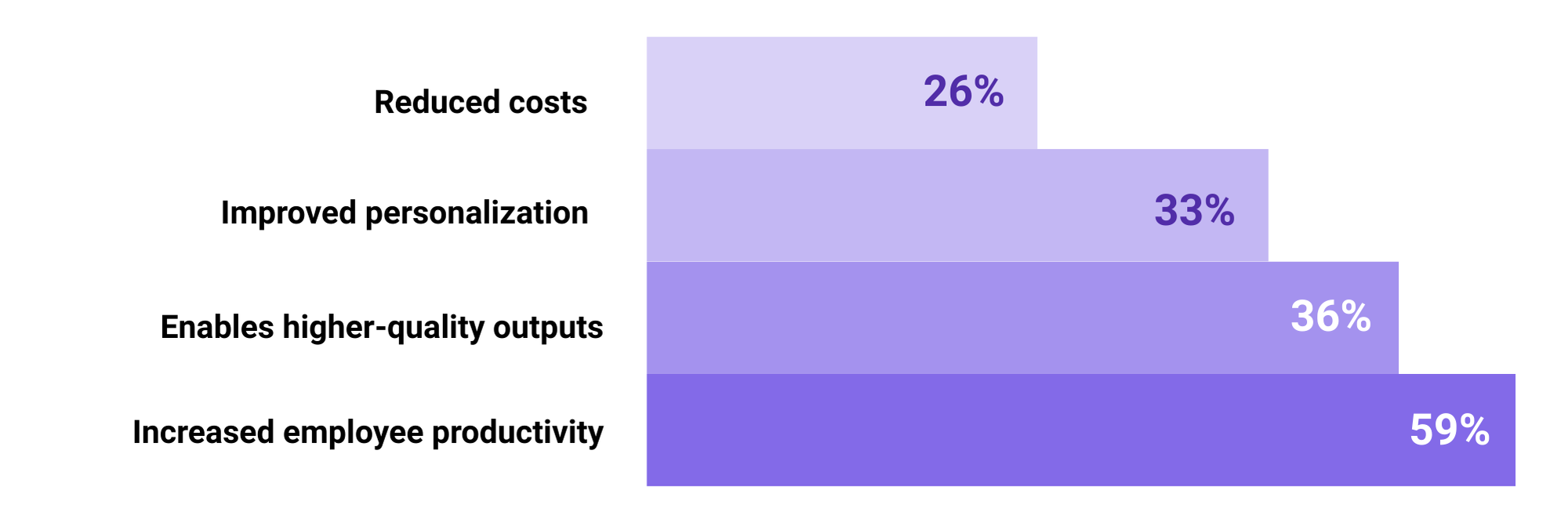
Utilizing data and AI for predictive analytics helps travel companies move from guesswork based on past results to foresight, from static workflows to intelligent automation, and from generalized experiences to truly personalized journeys. Across airlines, hotels, mobility services, and digital travel platforms, predictive analytics help to anticipate demand, personalize experiences, and optimize operations.
Role of Data and AI in Predictive Analytics?
Predictive analytics relies on the synergy between data and artificial intelligence, where data forms the foundation, and AI provides insights. Modern organizations generate massive volumes, but raw data alone doesn’t deliver answers. Adopting data platforms helps to integrate, clean, and structure this information. High-quality, unified data ensures predictive models are accurate and unbiased.
Once data is accessible and governed, AI and machine learning take over to discover patterns, relationships, and trends that would otherwise be difficult for humans to interpret. AI models analyze both historical and present data to predict likely outcomes, such as future demand, customer intent, pricing behavior, occupancy patterns, or operational disruptions. With continuous exposure to new data, AI models learn, adapt, and refine their accuracy. Together, data and AI enable predictive analytics to uncover hidden insights and enable real-time decision-making. Travel organizations can anticipate outcomes, adjust pricing dynamically, optimize inventory, and improve customer personalization.
Why Do Predictive Analytics Matter in the Travel Industry?
Understand Booking Intent and Customer Behavior
Predictive analytics provide travel companies with deeper insights to understand customer intent and behavior. By analyzing browsing activity, search patterns, historical booking behavior, trip purpose, and even external triggers like events or seasonality, travel providers can anticipate when and why a customer is likely to book. Machine learning models can identify early indicators of conversion or abandonment, allowing businesses to message, personalize offers, and connect at the right moment. This strategic planning and execution increases booking conversion rates and helps to deliver more relevant customer journeys.
Optimize Pricing Dynamically
Price sensitivity in the travel sector fluctuates rapidly based on demand patterns, competition, weather, geographic events, and time to departure. Predictive analytics empowers airlines, hotels, and online travel agencies (OTAs) to adjust pricing based on demand with accurate forecasting. Predicting demand curves provides insights into travelers’ willingness to pay, and market triggers that help companies optimize fare structures and promotional strategies.
Improve Fleet and Inventory Utilization
For hotels, airlines, cruise lines, and rental companies, unused assets represent lost revenue and operational inefficiency. Predictive analytics helps forecast demand more accurately, allowing businesses to deploy fleets, rooms, or inventory where and when they are needed most. For airlines, this may mean assigning larger aircraft on routes with projected high occupancy or adjusting schedules based on booking momentum. For hotels, it is for better planning of seasonal trends, group bookings, and regional events. This optimization ensures resources generate maximum value while minimizing excess capacity across the network.
Reducing Operational Disruptions and Improving Efficiency
Predictive analytics help operators foresee disruptions such as weather-related delays, maintenance requirements, supply shortages, or staffing gaps. Airlines can use predictive maintenance algorithms to detect equipment failure well in advance, reduce downtime, and costly delays. Hotels can optimize housekeeping schedules, energy consumption, and staffing based on occupancy predictions. Transportation and logistics teams can adjust routing in advance based on environmental or passenger traffic insights. Predicting challenges instead of reacting to them helps travel companies reduce inefficiencies, decrease operational costs, and improve reliability across their services.
How Snowflake Enables Predictive Analytics
Snowflake enhances predictive analytics with the unified AI Data Cloud for the travel and hospitality industry. This gathers disparate systems, fragmented data, and disconnected analytics workflows into one scalable platform. In an industry where data exists across booking engines, loyalty systems, airline reservations, hotel PMS platforms, IoT devices, and third-party travel data feeds, Snowflake eliminates silos and creates a single, governed data foundation. So, predictive models are trained on complete, clean, and context-rich data necessary for accuracy.
One of Snowflake’s biggest strengths is its ability to handle both historical and real-time data simultaneously. Travel and hospitality companies can instantly access:
- Geospatial data for route and destination intelligence
- Weather data to optimize staffing, fleet, and disruption plans
- Demographic and commercial data for campaign targeting and guest personalization
- Market signals to refine pricing, merchandising, and revenue optimization
Snowflake’s ecosystem is built to support advanced machine learning and AI workloads. With elastic computing, Snowflake can scale up during high-travel seasons and scale down during slower periods. With Snowpark, Cortex AI, Python-native environments, and ML integrations, teams can build, deploy, and operationalize models directly where data already lives. This reduces latency, ensures governance, and accelerates time-to-insight.
What sets the platform apart is its connectivity. Snowflake enables secure, zero-copy data sharing across operational teams and with the broader ecosystem of data partners via the Snowflake Marketplace. Snowflake also supports interoperability with leading frameworks like Databricks, AWS AI services, Azure ML, and more, to create an end-to-end environment where data engineering, AI, and predictive analytics workflows are seamlessly connected.
Predictive Analytics Use Cases Powered by Snowflake
Snowflake enables predictive analytics that help travel companies grow faster, operate smarter, and deliver better customer experiences. Key capabilities include
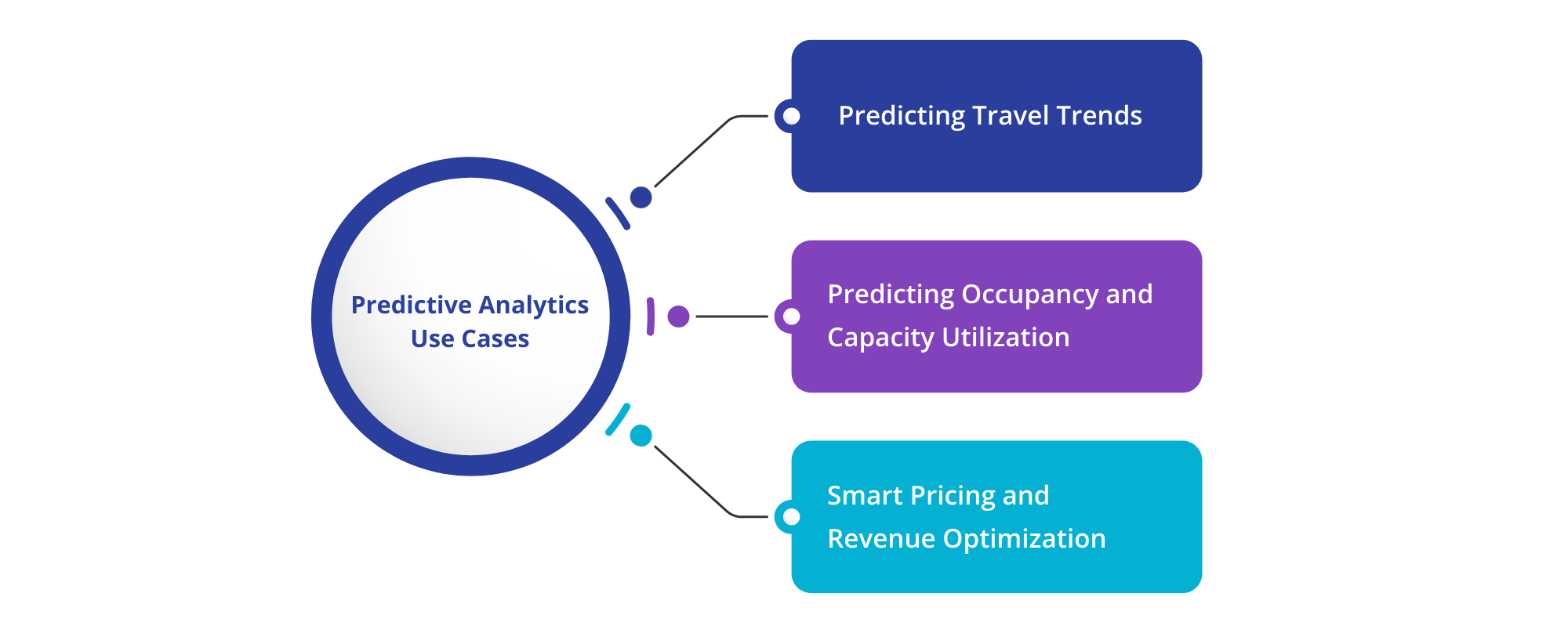
Predicting Travel Trends
With Snowflake, travel platforms can combine real-time search behavior, loyalty interactions, historical booking patterns, and sentiment signals. Machine learning models use this unified dataset to detect intent signals, emerging demand hotspots, shifting traveler preferences, and market disruptions before they fully materialize. For example, an increase in flight searches for a certain destination, combined with local event data, indicates rising interest. This helps travel brands to adjust market spending, introduce tailored packages, or increase capacity. Predictive insight supports highly targeted marketing personalization, promotional timing, and experience design that aligns with traveler demand before competitors respond.
Predicting Occupancy and Capacity Utilization
Snowflake enables predictive models that forecast occupancy and asset utilization across various travel sectors like hotels, airlines, rental agencies, cruise lines, and transportation networks. Hotels can anticipate room demand weeks or months ahead to optimize housekeeping schedules, energy usage, and promotional pricing. Airlines can use seat-load forecasts to adjust flight frequencies, route pairings, and equipment sizing to maximize profitability. Car rental companies gain visibility into regional demand spikes, maintenance cycles, and vehicle turnover, allowing them to balance inventory across branches. Cruise operators can optimize itineraries based on demand patterns, port capacity, and weather predictions. This helps travel organizations reduce operational waste, minimize idle assets, and ensure the right resources are available at the right time.
Smart Pricing and Revenue Optimization
Smart pricing in travel becomes far more effective with predictive analytics using Snowflake. Instead of relying on static pricing, businesses can dynamically adjust fares based on demand elasticity, ongoing competitive signals, and customer segments. With continuous forecasting, models automatically recommend or execute pricing changes based on expected demand, seasonality, and market shifts. This helps brands to maximize revenue and align with current trends.
Conclusion
Predictive analytics has become the competitive differentiator that is transforming the travel industry. Modern organizations are using data to anticipate behavior, respond to market trends, and optimize operations, and will outperform those relying on traditional methods. With Snowflake powering a unified AI-driven data ecosystem, travel companies gain the ability to scale effectively across pricing, fleet planning, marketing, personalization, and more. This results in a more agile travel business that runs proactively and drives high revenue. Partner with Kasmo, where our proven Snowflake implementations and end-to-end AI solutions accelerate transformation for travel and hospitality brands. Our teams help unify scattered data, activate predictive analytics, and accelerate time-to-value across key operations. This enables faster decision-making and more personalized travel experiences.