Introduction
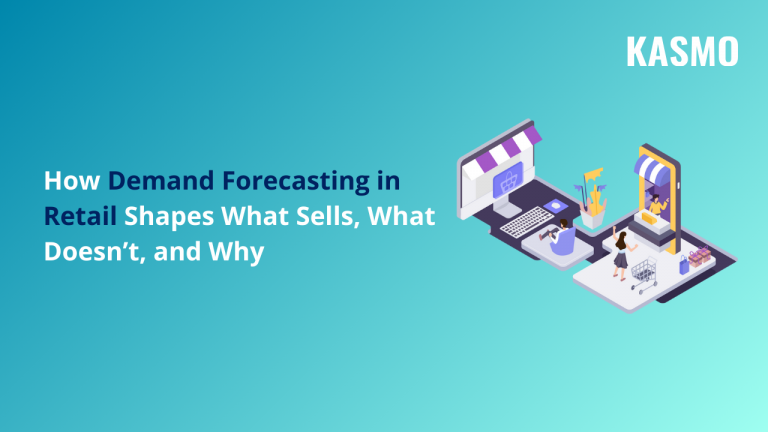
Retail success today depends less on intuition and more on the ability to predict what customers will want next. As customer behavior shifts across digital and physical channels, retailers face constant uncertainty around what products will sell, where, and when. A sudden promotion going viral, unexpected changes, or regional buying trends can disrupt the planning.
Retailers can easily predict these unexpected seniors using demand forecasting. By adopting data, analytics, and AI-driven intelligence, retailers can avoid guesswork and make data-driven decisions. Modern demand forecasting enables teams to align inventory, supply chain operations, pricing, and promotions with accurate customer demand, ensuring products are always available. Salesforce helps retailers achieve this by unifying data, applying AI-driven predictions, and embedding insights into retail workflows.
In this blog, we explore what demand forecasting in retail is, the different forecasting approaches retailers use, how it supports teams across functions, and how Salesforce enables AI-driven demand forecasting.
What Is Demand Forecasting in Retail?
Demand forecasting in retail is the process of predicting future customer demand for products across stores, channels, and time periods using historical data and advanced analytics. It helps retailers estimate what products will be needed, in what quantity, at which locations, and at what time. Demand forecasting incorporates several factors like promotions, pricing changes, seasonality, regional preferences, weather, supply constraints, and digital customer behavior.
Advanced AI and ML technologies provide precise visibility into consumer behavior, enabling retailers to stay agile amid constantly changing market dynamics. In simple terms, demand forecasting provides retail brands with the intelligence required to align inventory, supply chain operations, pricing, and promotions with actual customer demand.
Retail Demand Forecasting Importance

Demand forecasting is essential for retail profitability, operational efficiency, and customer satisfaction. Its importance spans across the retail sector:
Prevents Stockouts and Overstocking: Accurate forecasts ensure the right products are available at the right time and place. This reduces lost sales due to stockouts and minimizes excess inventory that leads to heavy discounting and write-offs.
Improves Inventory Planning: Enables smarter replenishment and inventory allocation decisions. Retailers can maintain optimal stock levels, improve inventory turnover, and reduce holding and storage costs.
Increases Profitability: By aligning supply with demand, retailers avoid last-minute markdowns and unnecessary logistics costs. This helps protect margins while maximizing full-price sell-through.
Enhances Customer Experience: When customers consistently find products available across channels, satisfaction and loyalty increase. Reliable availability builds trust and improves repeat purchases.
Strengthens Supply Chain Efficiency: Accurate forecasts improve supplier planning, transportation scheduling, and warehouse operations. This reduces operational disruptions and handles demand changes.
Strategic Decision-Making: Demand forecasting provides data-backed insights that support smarter pricing, promotion planning, and product launch strategies. Understanding demand patterns, retailers can make effective decisions to improve competitiveness and align offerings with market needs.
Types of Retail Demand Forecasting
Retailers use different demand forecasting approaches based on data availability, time horizon, and business objectives. Each method serves a distinct purpose, helping in inventory planning to strategic decision-making.
Quantitative Demand Forecasting
This approach uses sales data and statistical models to estimate future demand. It works best for retailers with stable demand patterns and reliable data, such as grocery or electronics businesses. Tools like time-series analysis, regression models, and machine learning algorithms help identify recurring demand cycles and anomalies. This type cannot effectively anticipate sudden market disruptions or demand for entirely new products with no sales history.
Qualitative Forecasting
This method is based on expert opinions, market research, and consumer insights rather than historical data. Retailers use this when launching new products, entering unfamiliar markets, or responding to emerging trends. This is inefficient to provide subjective judgment that can introduce bias, making forecasts less precise.
Short-Term Forecasting
Short-term forecasting focuses on predicting demand for the near future, like days, weeks, or a few months. It is essential for operational planning, ensuring the right stock levels during promotions, seasonal spikes, or high-traffic periods. Retailers can quickly adjust inventory, staffing, and logistics to match immediate demand. This may not provide visibility to long-term trends or strategic planning needs.
Long-Term Forecasting
Long-term forecasting examines demand over a year or more, enabling strategic decision-making such as market expansion, capital investments, and assortment planning. Retailers use this for growth planning, negotiations, and production scheduling. This approach is less accurate for short-term operational needs; it depends on trend analysis and macroeconomic assumptions.
How Retail Teams Use Demand Forecasting Across Functions
Effective demand forecasting drives efficiency across the entire retail organization. By turning predictive insights into actionable strategies, every team can operate and make real-time decisions-
Merchandising
These teams rely on demand forecasts to determine which products to stock, in what quantities, and in which locations. Accurate predictions help to identify high-demand SKUs, seasonal trends, and regional preferences. This reduces overstock and markdowns and improves product availability. Merchandisers can also plan assortments dynamically, introducing new products or reducing low-performing ones based on predicted demand.
Supply Chain and Inventory Management

Source: Gartner
Supply chain teams use demand forecasts to manage inventory levels, warehouse stocking, and logistics. By predicting which items will sell and when, retailers can ensure optimal stock distribution. This helps minimize stockouts, reduce storage costs, and avoid the risk of obsolete inventory. Forecast-driven supply chain planning also helps in scheduling replenishments and coordinating with suppliers more efficiently, ensuring the timely availability of products.
Targeted Promotions and Campaigns
Marketing teams can use demand forecasting to plan promotions, discounts, and campaigns at the right time and for the right products. Predictive insights allow marketers to anticipate demand spikes during holidays or special events. They can create personalized campaigns aligned with expected customer behavior, improving engagement, conversion rates, and ROI. This helps teams to prevent over-promoting slow-moving inventory and reduce unnecessary markdowns.
Sales Team
Sales teams can prioritize leads, allocate resources, and prepare for expected customer interest using demand forecasts. It helps in understanding which products or categories are likely to sell, and reps can focus on high-impact opportunities, provide better recommendations, and meet customers’ expectations more effectively. Forecast-driven insights also help in managing targets and aligning sales strategies with actual market demand.
Financial Planning
Finance teams rely on accurate demand forecasts to project revenue, plan budgets, and manage cash flow. Retailers can anticipate demand, calculate potential margins, plan procurement spending, and allocate capital efficiently. Forecast-driven insights support strategic decision-making, like adjusting pricing, preparing for peak periods, and minimizing financial loss.
Salesforce Role in Smart Retail Demand Forecasting
Salesforce Data Cloud
Accurate demand forecasting starts with accurate and quality data. Salesforce Data Cloud ingests and harmonizes data from POS systems, eCommerce platforms, ERP, supply chain systems, loyalty programs, and marketing channels. These data pipelines and identity resolution help to create a continuously updated view of product demand across channels. Retail teams gain visibility into purchase behavior, browsing patterns, promotions, and inventory constraints.
Einstein Discovery
Demand forecasting gets advanced using Einstein Discovery. It is an AI-powered tool that uses machine learning to analyze unified retail data and uncover the key factors influencing demand. By continuously evaluating variables like pricing, promotions, seasonality, and customer behavior, it generates dynamic forecasts at product and location levels. It also provides actionable recommendations, helping retailers adjust inventory, promotions, and pricing.
Salesforce Retail Cloud
Salesforce Retail Cloud operationalizes demand forecasts by embedding insights into merchandising, sales, and service workflows. Merchandisers can view demand trends, and sales teams can align outreach with predicted buying intent. Forecast insights are available contextually within CRM records, planning tools, and task flows, ensuring teams act on predictions as part of daily operations.
Automation and Flow
Salesforce enables automated actions based on forecast changes. When demand thresholds are met, workflows can trigger replenishment requests, inventory rebalancing, supplier notifications, or pricing updates. This automation reduces manual intervention and response times.
External Data Integration
Salesforce integrates external data sources like economic indicators, regional events, market research firms, and social media platforms into forecasting. These external variables significantly improve forecast precision. Retailers can model “what-if” scenarios to understand how external changes may impact demand and adjust strategies accordingly.
Conclusion
Accurate demand forecasting is now essential for retailers looking to balance inventory, profitability, and customer expectations. Retailers that rely on disconnected systems and manual forecasts struggle to keep pace with rapidly changing demand, leading to stock imbalances and margin erosion. In contrast, organizations that adopt AI-powered demand forecasting can anticipate shifts, optimize inventory, and respond faster across the entire system.
With Salesforce Data Cloud, Einstein Discovery, Retail Cloud, and automation capabilities, retailers gain a unified, intelligence-driven forecasting foundation. Gaining insights into daily operations, Salesforce enables retailers to reduce risk, protect margins, and deliver better customer experiences. Kasmo helps retail brands design, implement, and scale Salesforce-powered demand forecasting solutions and delivers measurable business outcomes.