Introduction
Pharma marketing is at a major inflection point. HCPs and patients no longer engage through a single channel but expect every interaction to be timely, relevant, and consistent. Traditional, channel-centric approaches struggle to meet these expectations, often resulting in fragmented experiences and inconsistent messaging.
To meet rising expectations while navigating strict regulatory requirements, pharma businesses should adopt omnichannel marketing. It connects data, insights, and engagement into a single, cohesive strategy. By unifying interactions across channels, pharma organizations can create personalized, compliant, and meaningful journeys that support better decision-making and stronger relationships.
In this blog, we explore what omnichannel marketing means in the pharma context, the key components of an effective strategy, and how Snowflake empowers pharma organizations to drive better engagement through data-driven, compliant, and engaging marketing.
What is Omnichannel marketing in Pharma?
Omnichannel marketing in pharma is a customer-centric approach that integrates all online and offline channels to build a consistent experience for healthcare providers (HCPs), patients, and other stakeholders. The goal is to deliver personalized interaction to HCPs and patients based on their behavior and engagement across channels.
For example, a pharma company sends an email campaign to HCPs about a new therapy, followed by personalized content on their portal and a virtual detail session. All interactions are tracked and understood to personalize communications.
Key features include-
- Integrate data from CRM systems, marketing automation tools, social media, mobile apps, email, webinars, and field sales interactions.
- Ensure that messages are coherent and complementary, regardless of the channel.
- Use analytics to track engagement and adjust campaigns dynamically.
- Manage sensitive health data securely while maintaining compliance with regulations like HIPAA or GDPR.
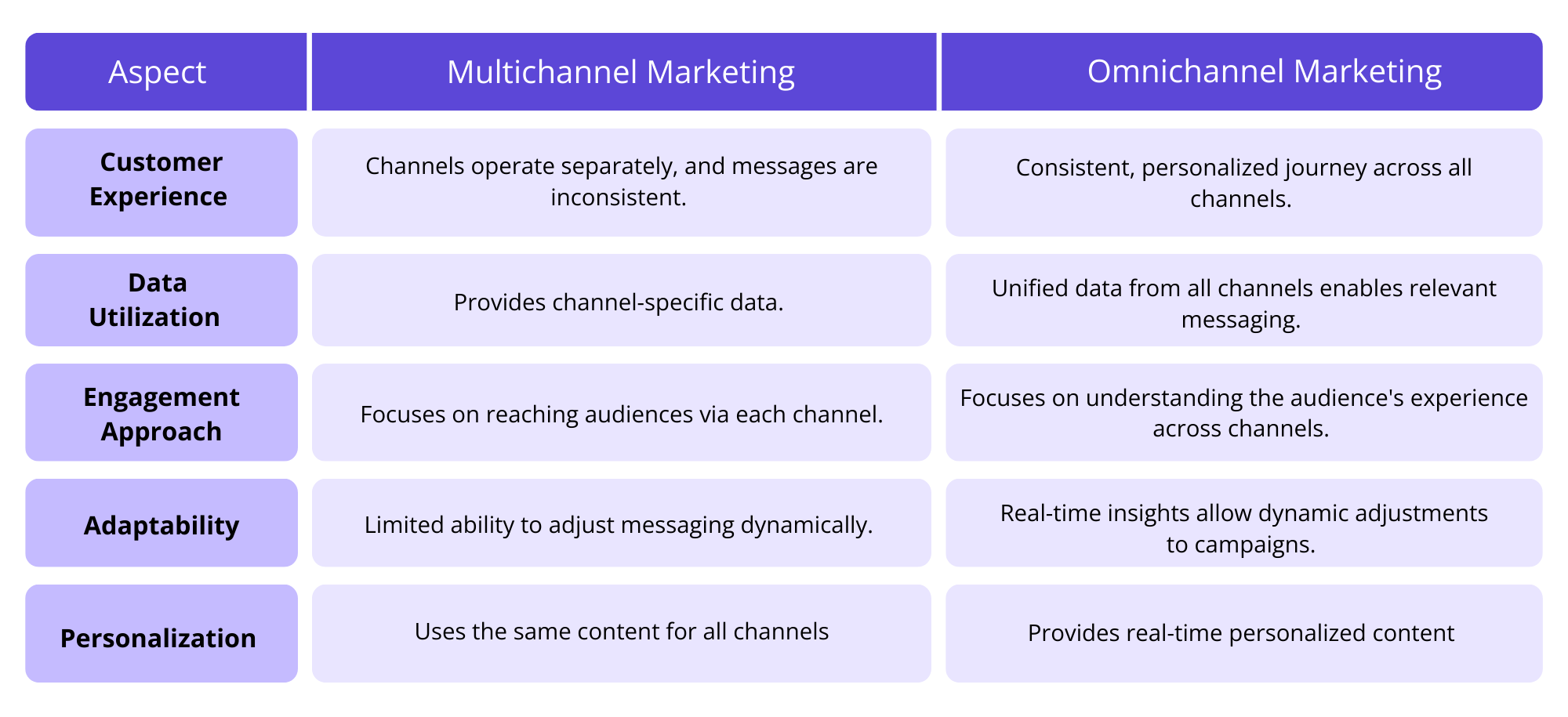
Difference between Multichannel and Omnichannel Marketing in Pharma
Key Components of an Effective Omnichannel Marketing Strategy
Data Integration
Data is the backbone of omnichannel marketing. Integrate data from multiple sources like CRM, marketing automation platforms, field sales, clinical data, and digital touchpoints. This helps to create a unified view of HCPs and patients. Once data is unified, segmentation allows marketers to group data based on specialties, prescribing behavior, engagement patterns, or preferences. This provides targeted communication, improves engagement, and increases ROI.
Personalization and Automation
Personalization ensures that messages, content, and interactions are specific to the individual’s needs, preferences, or behaviors. Automation tools allow pharma marketers to deliver this and ensure consistent, timely interactions across multiple channels. For example, educational content for a physician based on past engagement or reminders for patients on adherence programs.
HCP Mapping
Mapping the journey of HCPs involves understanding all the touchpoints and interactions they have with your brand, from awareness to prescription decision-making. It includes identifying key engagement moments, preferred channels, content needs, and potential drop-off points. This guides HCPs through their decision-making process, improves engagement, and supports better patient outcomes.
Right Channel Selection
Not all channels are equally effective for every HCP or patient. Selecting the right channel depends on audience preference, regulatory requirements, and the stage of the journey. This is essential to ensure that messages reach the audience where they are most likely to engage, increase campaign effectiveness, and reduce wasted effort.
Steps to Implement an Omnichannel Marketing Strategy in Pharma
Building an effective omnichannel strategy in pharma is about orchestrating data, engagement, and compliance into a single, connected approach. Effective steps include-
Establish a Unified Data Foundation
The first and major step is to build a unified data foundation for successful omnichannel marketing. This step focuses on consolidating data from CRM systems, digital campaigns, and third-party sources into one centralized platform. A unified data foundation improves data accuracy and enables consistent engagement across channels.
Design HCP-Centric Engagement Journeys
Rather than planning campaigns by channel, pharma organizations should design engagement journeys around HCP needs and decision stages. This involves identifying key moments where education, clinical information, or follow-ups are most valuable. Focus on building each interaction on previous ones, creating continuity and relevance throughout the engagement lifecycle.
Build Personalized, Cross-Channel Engagement
With data and planning in place, the next step is delivering personalized content across channels such as email, webinars, digital portals, and field engagements. Messaging is tailored based on specialty, behavior, and engagement history, ensuring that HCPs receive relevant information without duplication or inconsistency.
Compliance and Governance
Embedding regulatory compliance into every interaction is non-negotiable. This step ensures that consent management, data privacy, content approvals, and audit trails are built into marketing workflows. By integrating governance from the start, pharma marketers can enhance engagement while meeting regulatory requirements.
Measure Impact and Continuously Optimize
The final step focuses on using data analytics and AI to measure engagement effectiveness across channels. Pharma marketers can assess which touchpoints drive action, refine content strategies, and optimize channel mix based on real-world insights. Continuous optimization ensures the omnichannel strategy evolves with HCP behavior, market dynamics, and business goals.
How Snowflake Transforms Marketing in Pharma?
Pharma marketing is increasingly driven by the need to deliver personalized, compliant, and data-driven engagement to HCPs and patients across multiple channels. Snowflake, as a cloud-native data platform, helps to transform marketing by unifying data sources, enabling real-time analytics, and supporting personalization.
Unified Data Platform
Snowflake enables pharma companies to bring together CRM data, digital campaign metrics, prescription behavior, patient programs, and third-party data into a single, secure platform. Using Snowflake’s Data Cloud, marketers can create a 360-degree view of HCPs and patients, breaking down silos that limit insights and campaign effectiveness.
Real-Time Analytics and Insights
With Snowflake’s Snowpark and native SQL support, pharma marketers can analyze large datasets from different sources in real time. This enables marketing teams to monitor campaign performance, track HCP engagement, and identify trends or gaps immediately. Real-time insights help to adjust messaging or channel strategies dynamically, ensuring timely and relevant interactions.
Personalization at Scale
Snowflake’s secure data sharing and integrated analytics empower pharma companies to deliver hyper-personalized content across email, portals, webinars, and field engagements. For example, insights from prescribing patterns or digital interactions can trigger automated, tailored messages that resonate with specific HCPs or patient segments, increasing engagement and adherence.
Secure Collaboration and Compliance
Pharma data is highly sensitive, subject to HIPAA, GDPR, and other regulations. Snowflake data sharing and governance tools allow marketing, medical, and sales teams to collaborate without duplicating data or compromising privacy. This ensures compliant, secure, and consistent communication across all channels.
Advanced Predictive Analytics
Using Snowflake’s integration with AI/ML tools and its support for large-scale data workloads, pharma marketers can use predictive analytics and AI models to anticipate HCP behavior, forecast campaign outcomes, and optimize channel allocation. This approach ensures marketing strategies are efficient for maximizing ROI.
Conclusion
Effective omnichannel marketing turns data into impact. As HCPs and patients engage across an expanding mix of channels, success depends on the ability to unify data, personalize interactions, and adapt in real time. Snowflake accelerates this transformation by unifying pharma data, enabling real-time intelligence, and supporting compliant personalization. The result is a connected marketing ecosystem that drives meaningful engagement, improves decision-making, and maximizes ROI.
As expectations continue to rise, the question is no longer whether pharma organizations should adopt omnichannel marketing, but how quickly they can do it. Kasmo enables pharma marketers to operationalize engagement and implement an effective omnichannel strategy using Snowflake. This empowers teams to deliver consistent, personalized experiences across every HCP and patient touchpoint.