Introduction
Clinical documentation is where patient care, compliance, and financial integrity intersect. It serves as the source to connect clinical decisions with regulatory requirements and reimbursement outcomes. Every diagnosis recorded, procedure documented, and note captured influences not only treatment continuity but also audit readiness and revenue accuracy. What was once a clinical record has evolved into a strategic asset that directly impacts operational efficiency, financial health, and patient outcomes.
As organizations navigate rising compliance pressures, revenue challenges, and clinician burnout, AI is emerging as a transformative tool in clinical documentation. AI enables real-time documentation assistance, data extraction, reduces manual effort, and improves accuracy. In this blog, we explore the role of AI in clinical documentation and workflows, and discuss how Snowflake’s AI Data Cloud provides the scalable foundation needed to power secure, AI driven documentation in healthcare.
What Is Clinical Documentation?
Clinical documentation is the comprehensive recording of a patient’s medical history, diagnosis, treatments, observations, and more throughout the entire care journey. It includes both structured data, like diagnosis codes and lab results, and unstructured data like physician notes, discharge summaries, and clinical narratives. Beyond serving as a medical record, clinical documentation acts as the base information for care continuity, regulatory compliance, reimbursement accuracy, and healthcare analytics.
Why Clinical Documentation Needs Transformation
Administrative Burden on Clinicians
Healthcare professionals spend a major time entering, reviewing, and updating documentation. Manual data entry, repetitive charting, and navigating complex EHR (electronic health record) systems reduce time spent with patients. This administrative overload contributes to clinician burnout, lower productivity, and increased risk of incomplete documentation.
Regulatory and Compliance Complexity
Healthcare regulations and payer requirements continue to evolve. Documentation must accurately include medical necessity, severity of illness, procedures performed, and treatment justification. Even small gaps can trigger claim denials, compliance risks, or financial penalties. Organizations must maintain audit-ready documentation, but manual processes increase the likelihood of inconsistencies.
Revenue Leakage
Clinical documentation directly influences coding accuracy and reimbursement. When patient complexity or procedure details are not fully captured, organizations risk undercoding and delayed payments. Denied claims are usually caused by insufficient documentation rather than clinical errors. This creates hidden revenue leakage that impacts finances and increases administrative rework.
Fragmented Systems and Data Silos
Healthcare data is often spread across EHR platforms, billing systems, laboratory systems, imaging databases, and specialty applications. Documentation remains isolated within these systems, limiting cross-functional visibility. It is difficult to analyze without effective medical record management and advanced tools. This prevents organizations from gaining real-time insights into documentation and operational efficiency.
Impact on Care Quality
Incomplete or inconsistent documentation can affect clinical decision-making. When providers lack structured patient information, it may lead to delays, duplication of tests, or treatment decisions. High-quality documentation ensures better care and clinical outcomes.
The Role of AI in Modern Clinical Documentation
As documentation demands grow more complex, healthcare organizations are turning to AI to reduce administrative strain, along with improving accuracy and compliance. AI shifts enable payers and providers to automate documentation with intelligent systems embedded within medical record management.
Clinical Documentation Assistance
AI-powered tools can capture and transcribe patient encounters in real time using advanced speech recognition and natural language processing. Beyond simple transcription, AI understands and structures notes automatically and suggests relevant clinical details. This reduces manual typing, shortens documentation time, and allows clinicians to focus more on patient interactions.
Data Extraction from Unstructured Notes
A large portion of healthcare data exists in unstructured narratives like progress notes and discharge summaries. AI can analyze these notes, extract key clinical concepts, identify diagnoses, and convert them into structured data. This enables better coding accuracy and improves reporting.
Workflow Optimization
AI streamlines documentation workflows by automating repetitive tasks, summarizing lengthy records, and prioritizing follow-ups. By reducing load and administrative burden, it improves clinician productivity. The result is not just operational efficiency, but a better balance between patient care and documentation responsibilities.
Automated Coding
AI can assist in identifying appropriate diagnosis and procedure codes based on documented clinical evidence. By flagging missing details before claim submission, AI reduces undercoding and minimizes denials. This directly supports revenue integrity and also maintains compliance standards.
Proactive Compliance Monitoring
Instead of discovering documentation gaps during audits, AI can continuously monitor records for completeness and regulatory alignment. It can flag missing documentation elements, identify high-risk records, and meet necessary criteria. This helps to strengthen audit readiness and reduce compliance exposure.
How Snowflake Enables AI-Driven Clinical Documentation
AI can transform healthcare documentation, but it requires a secure, scalable, and unified data foundation. Snowflake’s AI Data Cloud provides healthcare organizations with a centralized, governed environment for data that is made analytics-ready for AI models. Instead of operating across fragmented systems, documentation workflows become connected, intelligent, and enterprise-wide.
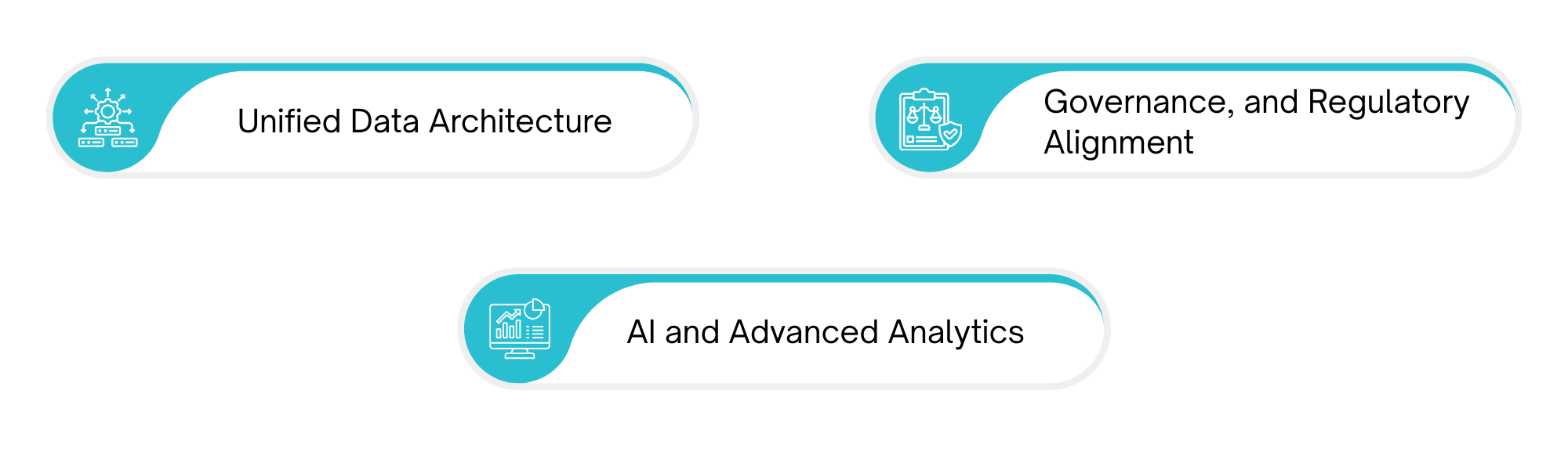
Unified Data Architecture
Snowflake’s AI Data Cloud enables healthcare organizations to consolidate diverse data sources into a single, scalable platform. Clinical documentation often spans multiple systems and huge amounts of data. Snowflake brings all these datasets together without requiring complex data re-engineering.
Its ability to store and process structured, semi-structured, and unstructured data allows clinical notes, discharge summaries, and more to coexist alongside coded data and financial records. This unified architecture ensures that AI models can analyze complete patient and documentation datasets. As a result, providers gain holistic visibility into coding accuracy and compliance readiness
Governance and Regulatory Alignment
Healthcare documentation must meet strict privacy and compliance standards. Snowflake provides enterprise-grade security features like role-based access control, dynamic data masking, end-to-end encryption, and detailed audit logging. These capabilities help maintain HIPAA-aligned data environments and allow authorized personnel to access sensitive patient information.
Snowflake’s secure data sharing allows healthcare providers to collaborate with payers, partners, and analytics teams without duplicating or exposing raw data. This is effective for value-based care reporting, audit preparation, and risk adjustment processes. Snowflake ensures that AI driven documentation initiatives remain compliant, transparent, and scalable.
AI and Advanced Analytics
Snowflake is designed to support modern AI and machine learning workloads at scale. With capabilities like Snowpark, organizations can build and deploy AI models directly within Snowflake, minimizing data movement and reducing latency. This enables real-time documentation validation, automated coding recommendations, predictive compliance alerts, and revenue integrity monitoring to occur closer to the data source.
Whether processing millions of clinical notes or running complex predictive models, Snowflake scales seamlessly without infrastructure management overhead. This flexibility allows healthcare leaders to experiment, innovate, and expand AI driven documentation use cases without disrupting existing operations.
Conclusion
Clinical documentation sits at the intersection of care quality, compliance, and financial performance. With AI, healthcare organizations can effectively transform clinical documentation. By embedding intelligence directly into documentation workflows, providers can reduce administrative burden and unlock real-time operational insights. For forward-looking healthcare leaders, AI driven documentation is a foundational pillar of digital transformation.
As a Snowflake Elite Partner, Kasmo helps healthcare organizations adopt Snowflake’s AI Data Cloud to operationalize clinical documentation. Our deep expertise in AI, data, and Snowflake helps payers and providers improve documentation accuracy, optimize revenue integrity, and accelerate data transformation.