
Introduction
When every shelf looks the same and every ad feels familiar, only the unexpected wins attention. For today’s consumer product goods industry, capturing consumer attention has become one of the biggest challenges. Traditional advertising alone is no longer enough to cut through noise. According to a Salesforce marketing report, 89% of marketers believe they must continually innovate to remain competitive. For CPG brands, innovation increasingly means rethinking how, where, and when they engage consumers beyond conventional channels.
In consumer packaged goods marketing, success often hinges on impulse, recall, and emotional connection. Whether it’s influencing an in-store decision, sparking social buzz, or turning everyday moments into brand experiences, CPG marketers need approaches that are immediate, memorable, and cost-effective. Guerrilla marketing fits this need by bringing creativity directly into consumers’ environments.
In this blog, we explore what guerrilla marketing is, different types, and strategies for marketers to build impactful campaigns, along with how platforms like Salesforce help to drive creative ideas into measurable marketing outcomes.
What is Guerrilla Marketing?
Guerrilla marketing is a creative marketing approach that uses unconventional, low-cost tactics to capture customers’ attention and leave a strong, memorable impression on audiences. Instead of relying on large advertising budgets or traditional media, guerrilla marketing focuses on originality, surprise, and emotional impact. The goal is to disrupt the everyday environment, like streets, public spaces, or digital platforms, in ways that make people stop, notice, and talk about the brand. Guerrilla marketing creates campaigns that can go viral and generate buzz. A strong guerrilla marketing strategy prioritizes creativity over spend and leverages human curiosity to drive word-of-mouth and organic reach.
What sets guerrilla marketing apart is its ability to turn ordinary moments into brand experiences. These campaigns are often designed to be unexpected and interactive, encouraging people to engage and share their experiences on social media. For example, a fitness brand might transform public benches into workout stations. Such executions create moments that feel personal and authentic.
A well-known guerrilla marketing example is Coca-Cola’s “Happiness Machine,” where a vending machine unexpectedly dispensed flowers, pizza, and gifts along with drinks. The surprise delighted participants and generated massive organic online engagement. This shows when executed thoughtfully; guerrilla marketing helps brands build emotional connections, stand out, and increase visibility.
Different Types of Guerrilla Marketing
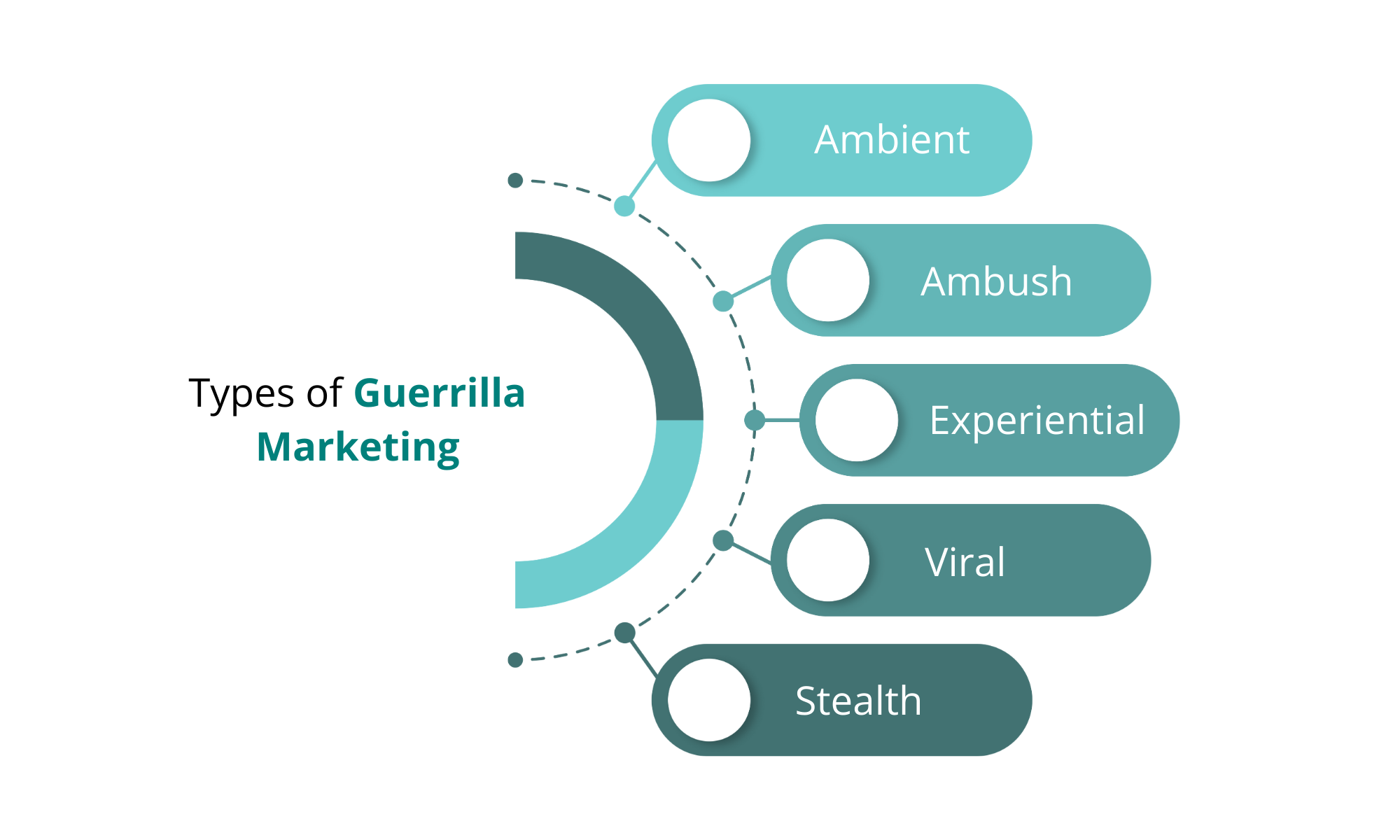
Ambient Guerrilla Marketing: This uses unexpected placements in everyday environments to capture attention. Brands integrate their message into surroundings like sidewalks, staircases, elevators, parking lots, or public furniture. This is an effective consumer packaged goods marketing tactics to create immediate visual impact with minimal disruption and strong social media engagement.
Ambush Guerrilla Marketing: Ambush marketing occurs when a brand uses attention from a major event without being an official sponsor. Instead of paying high sponsorship fees, brands creatively associate themselves with events like sports tournaments, concerts, or festivals through nearby activations or clever messaging.
Experiential Guerrilla Marketing: This marketing type focuses on direct audience participation. It creates immersive experiences where people interact with the brand in real time. This approach builds emotional connections and lasting brand recall because consumers are part of the story.
Viral Guerrilla Marketing: It is designed to spark organic online sharing. The campaign usually starts offline or in a controlled digital space but relies on creativity, humor, or shock to encourage people to spread it on social media. Success depends on emotional resonance and timing rather than ad budgets.
Stealth Guerrilla Marketing: Promotes a product without making it obvious that it’s advertising. For example, actors may use a product naturally in public spaces, or influencers may mention it casually without over-promotion. The goal is authenticity and word-of-mouth.
Why Adopt Guerrilla Marketing?
Guerrilla marketing offers unique advantages over traditional marketing approaches for brands seeking high impact with limited budgets.
Cost-Effective Brand Visibility
Unlike large-scale advertising campaigns, guerrilla marketing focuses on creativity rather than budget. Brands can achieve significant exposure through unconventional marketing strategy to reach a wide audience without heavy spending. This makes it especially beneficial for startups or small businesses aiming for maximum ROI.
Higher Customer Engagement
Guerrilla marketing campaigns are designed to surprise and delight audiences, creating memorable brand interactions. By engaging consumers directly through immersive experiences, interactive installations, or eye-catching stunts, brands can leave a lasting impression that traditional ads often fail to achieve.
Differentiation in a Saturated Market
In crowded marketplaces, conventional advertising can easily get lost. Guerrilla marketing allows brands to stand out by being innovative and memorable. Unique campaigns create differentiation and help build a distinct brand identity that resonates with consumers.
Emotional Connection and Brand Loyalty
By creating experiences that surprise, entertain, or resonate with audiences on a personal level, guerrilla marketing fosters emotional connections. Consumers who feel engaged and entertained by a campaign are more likely to develop positive associations with the brand, enhancing loyalty and repeat engagement.
Higher Sales and ROI
Guerrilla marketing campaigns are designed to drive immediate attention and engagement, which can translate into higher conversions and sales. As these campaigns are cost-effective, even small investments can generate more returns. The combination of high visibility, shareable content, and emotional engagement encourages word-of-mouth promotion and social sharing. This efficiency often results in a strong return on investment compared to traditional marketing methods.
How to Build a Guerrilla Marketing Strategy Step by Step
Define Your Objectives
Before launching any guerrilla campaign, it’s essential to identify the vision. Objectives can include brand awareness, lead generation, sales growth, or community engagement. Clear goals guide your creative direction and help measure the success of the campaign.
Understand Your Target Audience
Knowing your audience’s preferences, behaviors, and pain points is crucial. Guerrilla marketing needs personalization and relatability, so campaigns should resonate emotionally or contextually with your audience.
Creativity and Surprise
A guerrilla marketing strategy depends on creativity. Think out-of-the-box ideas to capture attention and spark conversation. Guerrilla marketing examples include flash mobs, interactive street art, or augmented reality experiences. The goal is to make a lasting impression that encourages sharing both offline and online.
 Use Technology
Technology plays a critical role in implementing an effective guerrilla marketing strategy. Digital platforms enable the creation of more interactive and personalized marketing and social media integrations, thereby increasing customer engagement.
Stay Updated with Trends
Guerrilla marketing is most effective when it aligns with current cultural, social, or digital trends. Staying aware of trends helps brands remain relevant and timely. When campaigns tap into what people are already talking about, they feel natural rather than forced. This increases the likelihood of organic sharing, media coverage, and a stronger audience connection.
Measure Results and Learn
Finally, assess the effectiveness of your campaign against your original objectives. Metrics can include social shares, engagement rates, foot traffic, sales impact, or brand sentiment. Learning from each campaign allows for continuous improvement, ensuring future guerrilla initiatives are even more effective.
How Does Salesforce Help in the Success of Guerrilla Marketing?
Salesforce plays a key role in turning guerrilla marketing moments into measurable business outcomes by connecting creativity with data and execution. With Salesforce Marketing Cloud, brands can unify customer data from multiple touchpoints like social media, mobile, web, and offline activations. When a guerrilla campaign sparks interest on the street or social platforms, Marketing Cloud captures those interactions, allowing marketers to immediately trigger personalized journeys, follow-ups, or offers. This ensures that the buzz created by guerrilla marketing is converted into meaningful, ongoing engagement rather than a one-time impression.
 Source: Salesforce
In the consumer product goods industry, Marketing Cloud enables brands to connect to all marketing efforts and provide a complete view of the customer profile. With Customer 360, brands can deliver a single, consistent message across channels, while Slack brings marketing and sales teams together to coordinate efforts and create a cohesive customer experience. Einstein AI within Marketing Cloud further enhances campaign impact by predicting the best channel, time, and message for follow-up communication. This allows brands to extend the emotional impact of guerrilla marketing with timely, relevant, and personalized messaging.
Salesforce also ensures accountability and optimization through robust analytics and integration capabilities. Marketing Cloud Intelligence helps measure campaign performance across channels, tracking engagement, conversions, and ROI from guerrilla initiatives. By integrating Marketing Cloud with Sales Cloud and Service Cloud, marketing-driven leads can seamlessly flow to sales and support teams. This makes Salesforce a powerful foundation for executing guerrilla marketing strategies.
Conclusion
Guerrilla marketing proves that in today’s cluttered marketplace, creativity and relevance matter more than scale. For CPG brands, an unconventional marketing strategy creates moments that cut through consumer fatigue, spark emotional connections, and drive organic conversations. When executed effectively, a guerrilla marketing strategy strengthens brand recall, fuels word-of-mouth, and turns everyday environments into powerful brand touchpoints that influence buying behavior.
Salesforce helps in transforming these high-impact moments into measurable growth. With Marketing Cloud, Customer 360, Einstein AI, and seamless integration across sales and service teams, Salesforce helps brands capture engagement, personalize follow-ups, and track ROI across channels. Kasmo, a Salesforce Summit Partner, brings deep expertise in implementing Salesforce for marketing. By aligning creative campaigns with data, automation, and analytics, Kasmo helps brands scale guerrilla marketing efforts into consistent and personalized customer experiences.