
Every successful startup begins with one simple truth — you can’t grow without understanding your customers. Knowing your customer means uncovering the motivations, needs, and behaviors that influence their buying decisions. Without this clarity, even the best business ideas can struggle to grow.
Customer tracking gives startups the power to truly understand their audience. It turns scattered interactions into actionable insights that power smarter decisions and stronger relationships. Implementing effective customer tracking can transform how you attract, engage, and retain your customers. Also, using AI in this process helps to gain potential hidden insights that help you to personalize experiences, strengthen loyalty, and build startup growth strategies.
In this blog, we’ll explore why customer tracking is essential for startups, the best practices to adopt, and how Salesforce AI-powered tools provide better insights to increase customer satisfaction.
What is Customer Tracking?
Customer tracking is the process of collecting, organizing, and analyzing data on how customers interact with your business, from the moment they hear about you, to browsing your website, making a purchase, or contacting support. It’s about understanding information like your customers’ interests, what they buy, and how they behave. It’s a way to get to know your customers better and to meet their needs. This helps businesses to improve customer experience, optimize marketing and sales, and make data-driven decisions.
Essential data points for customer tracking include:
Basic Customer Information: Name, email, phone number, location, and demographic details.
Purchase History: Products or services bought, frequency, purchase value, and repeat purchases.
Engagement Data: Interactions with emails, social media, campaigns, and notifications.
Customer Preferences: Favorite products, communication preferences, and interests.
Feedback: This includes customer queries, complaints, reviews, ratings, and support tickets.
Why Customer Tracking Matters?
Understand Customer Behavior: Businesses can easily know how customers engage with their products, services, and campaigns. This helps to identify preferences, pain points, and patterns in buying behavior at every touch point.
Personalize Experiences: Data-driven insights help to provide tailored recommendations, offers, and communications. This, in turn, increases customer engagement, satisfaction, and relationships.
Smarter Marketing and Sales: Analyzing marketing data shows which campaigns, channels, or strategies bring conversions. Through this, the marketing team can focus on specific promotional activities to increase ROI.
Make Data-Driven Decisions: Businesses can make decisions based on real customer behavior rather than assumptions. This helps in accurate product placement, store layouts, and customer service initiatives.
Customer Retention and Loyalty: Meeting your customers’ pain points helps to build stronger relationships. This leads to long-term loyalty, repeat purchases, and business growth.
Predict Trends: AI-powered tools forecast customer needs, buying patterns, and product demands. This helps businesses plan products, personalize marketing, and engagement strategies.
How to Maximize Customer Tracking for Your Startup
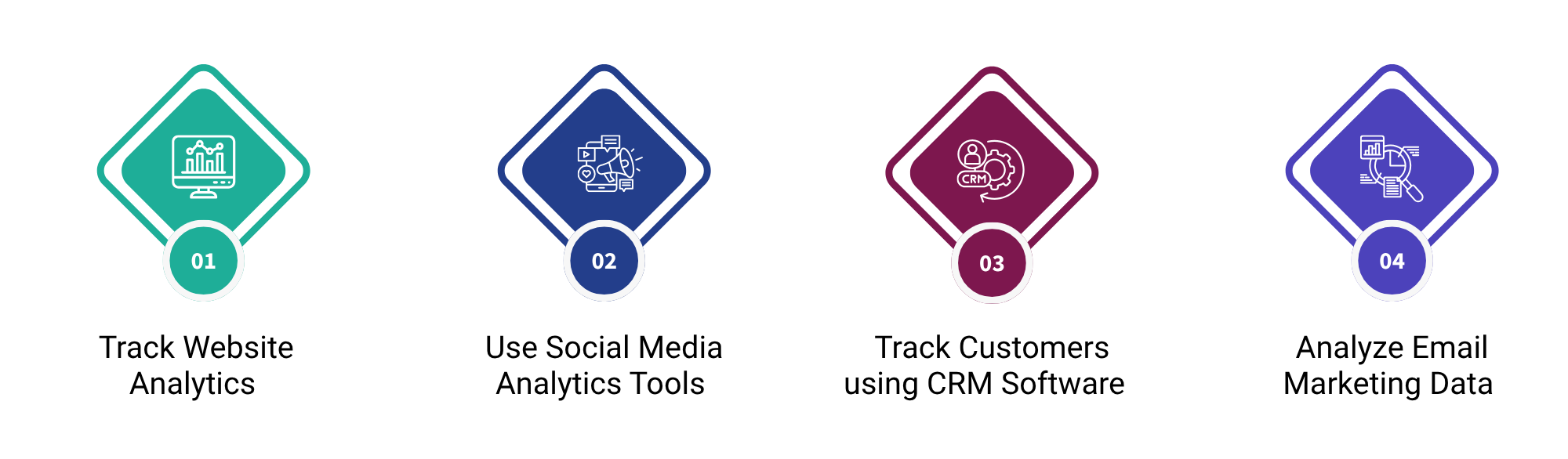
Track Website Analytics
The company’s website is often the first point of contact between your business and potential customers. Businesses can gain critical insights from it. Monitoring website metrics allows you to understand how visitors interact with your content, which pages attract more, and where users might be dropping off.
Powerful tools like Google Analytics help track key metrics such as visitor numbers, session duration, bounce rates, traffic sources, and page performance. Advanced visualization tools like Tableau builds interactive dashboards from raw website data. This deeper analysis helps startups identify popular content, make data-driven decisions, optimize navigation, and improve user experience.
Use Social Media Analytics Tools
Social media provides lots of hidden insights into customers’ likes, dislikes, and purchasing patterns. Startups can gain a clear understanding of customer interests and behavior by analyzing influences, product pages, or trends their audience follows. According to a McKinsey report, 79% of consumers trust online reviews as much as personal recommendations. Tracking interactions- likes, comments, shares, and mentions provides a window into customer sentiment, helping businesses identify what resonates and where improvements are needed.
Tools like Facebook Insights, LinkedIn Analytics, and Twitter Analytics make it easy to monitor engagement and audience demographics, while services like Hootsuite and Sprout Social allow startups to aggregate metrics across multiple platforms for a unified view of performance. Understanding social behavior enables startups to strengthen brand presence, foster loyalty, and build lasting customer relationships. Combining these insights with CRM data allows startups to understand the full customer journey—from discovery to engagement to conversion.
Track Customers using CRM Software
For startups, maintaining strong customer relationships is key to growth. A Customer Relationship Management (CRM) system acts as the central hub for all your customer interactions, from the first inquiry to post-sale support. It allows you to easily follow up with customers, identify trends in their buying behavior, and personalize your approach. Modern tools like HubSpot’s Starter Suite help you track when leads open emails, click links, or revisit your website. This provides insights to personalize communication and improve conversion rates.
Beyond tracking, AI-powered CRMs enable segmentation and data-driven decision-making. Startups can pair CRM data with feedback tools such as SurveyMonkey or Google Forms to understand customer sentiment. Collecting reviews or post-purchase feedback helps to improve satisfaction levels, refine your products, and elevate the experience.
Analyze Email Marketing Data
Email marketing remains one of the most powerful tools for personalized engagement. The goal isn’t just to send messages but to send the right message to the right audience at the right time. Email marketing software helps startups segment subscribers based on demographics, preferences, behavior, or engagement history. For example, you can group new subscribers separately from long-term customers, a highly engaging audience on specific products, etc. This clear grouping of customers allows for personalized campaigns that highlight relevance and build connectivity.
Best Practices For Effective Customer Tracking
Effective customer tracking includes how you turn insights into actions that improve customer experience and drive growth. Here are a few best practices to help your startup track customers more intelligently and responsibly.
Consider Customer Feedback
Tracking is only half the job; analyzing and acting on it makes the difference. To increase customer satisfaction goals, businesses need to turn customer feedback into an effective business strategy. Use surveys, reviews, and feedback forms to gather customer opinions about your products or services. Then, analyze this feedback to identify recurring issues, unmet needs, or emerging trends. Acting on feedback makes customers feel heard and valued, increasing their trust and loyalty.
Align Tracking with Business Goals
Startups need to align their tracking with their core business objectives. Start by identifying what you want to achieve. It’s either increasing customer retention, boosting conversions, or improving marketing ROI. Later, choose tracking metrics that directly link to those outcomes. This ensures that tracking data is not wasted, and every insight is used to achieve specific results.
Monitor Key Metrics
Effective tracking requires measuring the right metrics consistently. Some of the most critical metrics are Customer Acquisition Cost (CAC), Customer Lifetime Value (CLV), engagement rate, churn rate, etc. Monitoring these metrics regularly helps startups to identify areas of improvement and refine marketing strategies and optimize sales efforts. 
Data Privacy and Security Measures
Customers trust you to share their information. According to McKinsey, 60% of US consumers are concerned about the privacy of online transactions. Startups cannot neglect data security measures, as a single breach can damage credibility and erode customer confidence. So, ensure to collect, store, and process customer data ethically and in compliance with GDPR or CCPA. Inform users about what data you collect and how it’s used. This enables you to have better insights and stronger connections. Prioritizing privacy increases customer trust in your brand.
Why Do Startups Need AI for Customer Tracking?
Startups track their customer interactions across multiple digital channels like websites, social media, emails, and support channels. So, each touchpoint generates valuable data, which lies in separate systems, making it difficult to get a complete picture of your customers. Without a unified view, startups cannot gain buying behavior, customer needs, or deliver the personalized experiences modern consumers expect. As startups scale, these gaps hinder business opportunities and cause declining customer loyalty.
Artificial intelligence (AI) helps startups with these issues. Instead of manually piecing together scattered data, AI systems automatically gather, clean, and analyze information from every source. Startups can gain real-time insights about customer intent, purchase history, and engagement patterns. AI also provides cost-effective solutions, automates operations, improves customer service, and provides 24/7 support with chatbots, enabling startups to scale and build lasting customer relationships.
Using Salesforce’s AI-powered ecosystem, startups can take AI capabilities a step further. Salesforce provides perfect AI customer tracking software like Einstein AI and Agentforce. Einstein AI continuously learns from customer interactions to personalize recommendations, predict churn, and tailor strategies. Agentforce, a generative AI agent platform, transforms customer tracking into an intelligent, hands-free process. It helps startups interact with customers, resolve issues, schedule follow-ups, and capture data insights. Together, they ensure your customers receive seamless, personalized support and the entire customer lifecycle.
Conclusion
Understanding your customers is the key to growth. Startups need to track and analyze interactions and gain insights to deliver personalized experiences and enhance customer journeys. Artificial intelligence elevates customer tracking by automating processes and providing actionable insights. Salesforce’s Einstein AI and Agentforce empower startups to enhance customer tracking with predictive analytics and real-time guidance, ensuring every interaction is meaningful and consistent.
Remember, effective customer tracking isn’t just about monitoring behavior; it includes more. It helps startups to create consistent, personalized, and scalable experiences that strengthen loyalty, enhance engagement, and drive growth. Using AI-powered solutions and CRM, startups can increase customer satisfaction and gain more growth opportunities.